

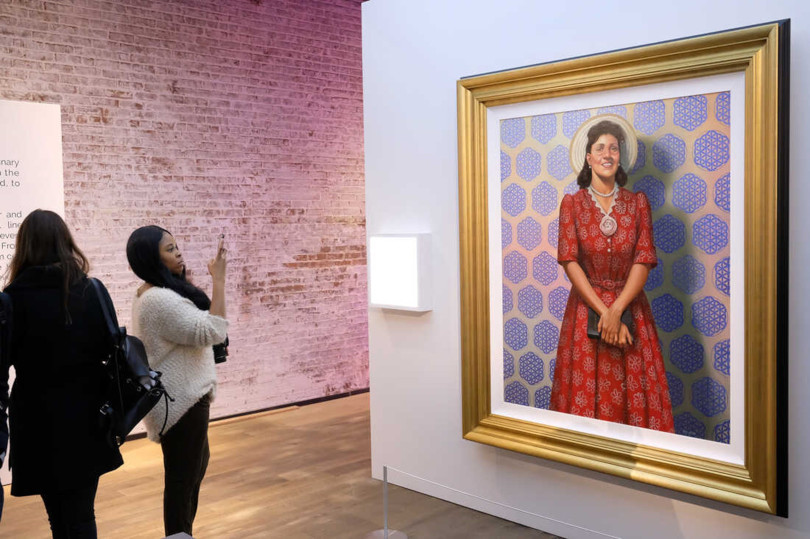
As National Women’s History Month draws to a close, there is a woman whom I wish to highlight in this post. Women have always played an active and vital role not only in American history, culture, and society, but also throughout the world. And this role remains evident today. In March of each year, Americans take the opportunity to honor the diverse and frequently overlooked achievements of women throughout history.
Various programs and events usually highlight the contributions of women such as Sojourner Truth, Rosa Parks, Michelle Obama, and Kamala Harris. These awesome women deserve to be honored, and rightly so. However, there are women whose lives and contributions to the world are not known or remembered: the Unsung Sheroes.
I want to honor a woman who, through the unlawful use of her cells, changed the world and didn’t even know it. Her name is Henrietta Lacks.
Who Is Henrietta Lacks?
Henrietta Lacks, nicknamed Hennie, a Black woman, was born Loretta Pleasant on August 1, 1920 in Roanoke, Virginia. When Henrietta was 4 years old, her mother passed away, giving birth to her 10th child. Henrietta was eventually placed with her maternal grandfather, who lived in a two-story log cabin that was once the slave quarters on the plantation that had been owned by Henrietta’s white great-grandfather and great-uncle.
While there, she shared a room with her first cousin, David (Day) Lacks. In 1935, when David was 19 and Henrietta was 14, they had a son named Lawrence. Four years later, their daughter, Elsie, was born. Unfortunately, Elsie had epilepsy and cerebral palsy and was described by the family as “different” or “deaf and dumb.” On April 10, 1941, David and Henrietta were married in Halifax County, Virginia. Later, relocating to Maryland, they had three more children.
As a devoted mother of five, Henrietta faced significant health challenges, later leading to her unintentional contribution to science.
Tragedy Hits
In November of 1950, Henrietta gave birth to her last child at the Johns Hopkins Hospital in Baltimore, four and a half months before she was diagnosed with cervical cancer. Her husband believed the child’s birth to be a miracle as he was “fighting off the cancer cells growing all around him.” Around the same time, Elsie was placed in the Hospital for the Negro Insane, later renamed Crownsville Hospital Center, where she died at 15 years of age.
On January 29, 1951, Henrietta went to Johns Hopkins because she felt a “knot” in her womb. She had previously told her cousins about the “knot,” and they assumed correctly that she was pregnant.
But after giving birth to Joseph, Henrietta suffered severe hemorrhaging. Her primary care doctor referred her back to Johns Hopkins. While there, her doctor, Howard W. Jones, took a biopsy of a mass found on her cervix. Soon after, Henrietta was told that she had a malignant epidermoid carcinoma of the cervix. In 1970, physicians discovered that she had been misdiagnosed and actually had an adenocarcinoma. This was a common mistake at the time, and the treatment would not have differed.
Henrietta was treated with radium tube inserts as an inpatient and discharged a few days later with instructions to return for X-ray treatments as a follow-up. During her treatments, two samples were harvested from her cervix without her permission or knowledge; one sample was healthy tissue, and the other was cancerous. These samples were given to George Otto Gey, a physician and cancer researcher at Johns Hopkins. The cells from the cancerous sample eventually became known as the HeLa immortal cell line, a commonly used cell line in contemporary biomedical research.
The use of her cells laid a foundation for revolutionary scientific research. Her cells were unique because they reproduced indefinitely. Henrietta’s cells have been used in countless studies, including breakthroughs in the development of Gene Mapping, the Polio Vaccine, COVID-19 research, cancer research and treatments, the flu, Parkinson’s, and HIV.
The Death of Henrietta Lacks
Unfortunately, on August 8, 1951, Henrietta, only 31 years old, went to Johns Hopkins for a routine treatment session and asked to be admitted due to continued severe abdominal pain. She received blood transfusions and remained at the hospital until her death on October 4, 1951.
A partial autopsy showed that the cancer had metastasized throughout her entire body. I would ask: Why did her cells – which were instrumental in saving other people’s lives – not save hers? Was not enough done in treating her, or was there more focus on taking her cells without her permission for their own gain?
Henrietta’s story raises important ethical questions about medical consent and racial disparities in healthcare. Perhaps her care and treatment were attributed to how people of color were and are treated today when it comes to medical attention. Historically, there is an overwhelming body of evidence in many studies on healthcare and people of color that points to an inextricable link between race and health disparities in the United States.
Whatever the reason, I believe Henrietta Lacks is an unsung shero to be recognized and honored.
The Aftermath
Somebody had to pay for the injustices that occurred in the life of Henrietta. She couldn’t fight for herself because she didn’t know, and didn’t give her consent for doctors to violate her medically.
In recent years, Henrietta’s family sought justice for the stolen cells that big pharmaceutical companies have profited from for years. With the assistance of attorney Ben Crump, the family won a series of lawsuits holding pharmaceutical brands accountable for their unlawful procurement of her cells to use in scientific research from which they profited billions.
In August 2024, the family filed a federal lawsuit in Maryland, accusing Novartis, a Swiss-based pharmaceutical company that owns hundreds of patents developed using HeLa cells. The family has since settled. While these cases and settlements may have offered some justice for Henrietta Lacks, it would have been better if true justice had prevented this from ever happening to her over seven decades ago.
Though she had no knowledge that her cells were used, let us remember, celebrate, honor, and salute Henrietta Lacks for her life-saving contributions to medicine and the world.
#HenriettaLacks
#DCVoice
#TheDCVoice
#DCVoiceMedia
#DCVoiceNetwork
#DCVoiceTV
#DCVoiceStudios
#DCVoiceOfficial
#changingthenarrative
#media
#news
Featured image courtesy of Nicholas Hunt/Getty Images.