
During Black Maternal Health Week, advocates across the country are raising awareness about a crisis that continues to impact Black women at alarming rates: maternal health disparities.
In the United States, Black women are nearly three times more likely to die from pregnancy-related complications than white women, according to the Centers for Disease Control and Prevention.
In Washington, D.C., the disparities are just as stark. A 2025 report from the DC Health found that between 2019 and 2023, infants born to Black mothers died at more than 3.5 times the rate of those born to white mothers.
A Crisis Rooted in Being Unheard
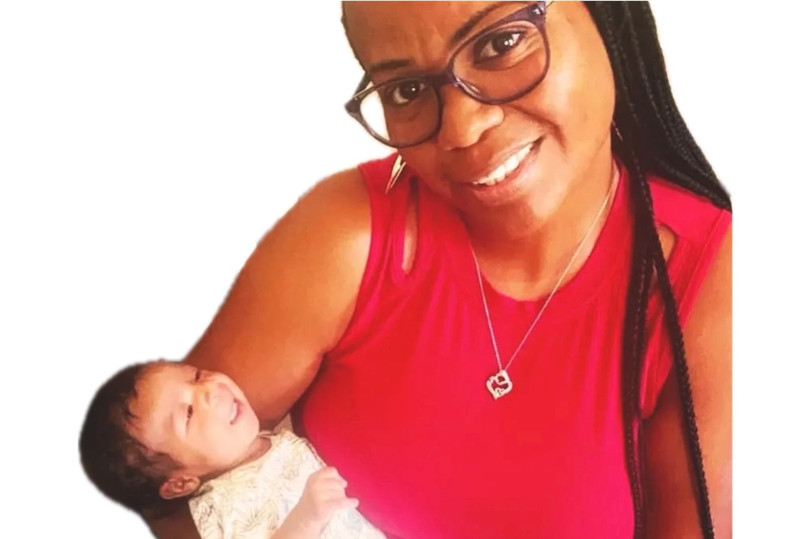
Nasheed Coleman, a certified perinatal doula, says she sees these disparities play out firsthand in her work supporting Black mothers. Coleman, whom I connected with after previously reporting on Black maternal health in Philadelphia, provides care and advocacy for women throughout pregnancy, childbirth, and postpartum.
“The biggest challenge is not being heard,” said Coleman, a certified perinatal doula. “Black women come into these spaces already having to advocate harder for themselves, and even then, their pain, their concerns, and their instincts are often dismissed.”
Coleman says the issue goes beyond individual experiences and reflects a deeper, systemic problem.
“We can talk about statistics all day, but at the core, it’s about bias,” she said. “Black women are still dying at higher rates, and it’s not because of lifestyle or choices. It’s because they’re not being listened to or treated with the same urgency and care.”
What This Looks Like in Real Life
“We can talk about statistics all day, but at the core, it’s about bias,” Coleman said. “Black women are still dying at higher rates, and it’s not because of lifestyle or choices. It’s because they’re not being listened to or treated with the same urgency and care.”
Her experiences as a doula have shown her how these disparities play out in real time. Coleman recalls moments when clients expressed pain, only to have their concerns dismissed, sometimes leading to more serious complications later.
Others, she says, are not fully informed of their options unless someone is there to ask the right questions.
That’s where doulas come in.
The Role of Doulas in Bridging the Gap
Doulas are trained professionals who provide emotional, physical, and informational support during pregnancy, childbirth, and postpartum care. For many Black mothers, they can serve as both an advocate and a bridge between patients and medical providers.
“A lot of times it’s about helping them find their voice and backing them up when needed,” Coleman said. “Sometimes just having someone there who is paying attention shifts how they’re treated.”
Research has shown that doula support can lead to better birth outcomes, including lower rates of complications and improved maternal satisfaction. But access remains a challenge.
“I see a difference when a doula is in the room,” Coleman said. “But what about those who cannot afford one or aren’t educated about the support that a doula can offer?”
Growing Access in Washington, D.C.
In Washington, D.C., several community-based organizations are working to close that gap. Groups like Mamatoto Village provide doula services, prenatal education, and workforce training programs aimed at increasing the number of culturally competent birth workers.
National organizations like Black Mamas Matter Alliance are also pushing for policy changes and greater investment in Black maternal health.
These efforts are especially important in communities most affected by disparities. According to D.C. Health, higher infant mortality rates are concentrated in Wards 7 and 8, among mothers on Medicaid, and among those who did not receive prenatal care in the first trimester.
For Coleman, the work is not just about birth, it’s about dignity. She recalls supporting a mother with a physical disability who faced barriers not only in childbirth, but in being recognized as capable of parenting.
With limited mobility and no traditional support system, the mother had to fight for resources and accommodations that should have been readily available. “It really showed me how layered this work is,” Coleman said. “It’s not just about being a Black mother—it’s also about disability, access, and whether the system sees you as capable.”
A Call for Change and for Trust
As Black Maternal Health Week continues, advocates say awareness must lead to action through policy changes, improved access to care, and greater support for solutions such as doulas.
For Black mothers navigating pregnancy, Coleman offers a message rooted in both empowerment and necessity.
“Trust yourself. Your voice matters, your body matters, and how you feel matters. Don’t be afraid to speak up.”
#NotBeingHeard
#Doulas
#BlackMaternalHealth
#DCVoice
#TheDCVoice
#DCVoiceMedia
#DCVoiceNetwork
#DCVoiceTV
#DCVoiceStudios
#DCVoiceOfficial
#changingthenarrative
#media
#news
Featured image/photo by Solen Feyissa on Unsplash.