
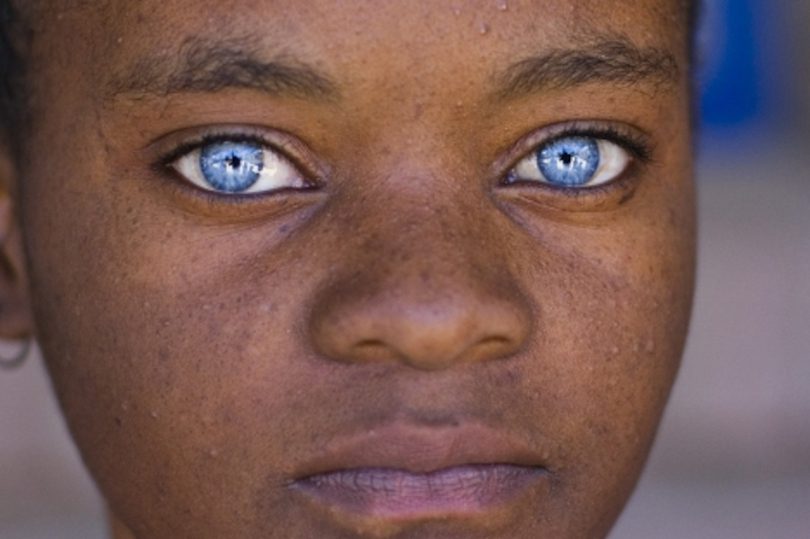
What is beauty? How do we, as a culture, define what’s beautiful? How does the dominant culture impact beauty standards? Toni Morrison explores these questions of beauty in her haunting and timeless novel, The Bluest Eye. In it, the prolific writer and Howard alum draws tells the story of a young Black girl named Pecola and her yearning to have light skin and blue eyes, like the baby doll she plays with.
The story begins with this young girl experiencing abuse at the hands of other kids, her parents, adults — the whole community. Boys at school chased her around the playground calling her names like “black e mo,” which is an old slang term to ridicule dark skin. Her dad constantly takes advantage of her body, and her mother lacks the tools to give her confidence because she never acquired them herself. These circumstances lead Pecola to the conclusion that having blue eyes would make the abuse stop. Blue eyes would make her desirable and loved like the baby doll she plays with. And her life becomes a futile search for those blue eyes.
The power of Toni Morrison and this haunting novel is in the relevance it still holds. We are in the age of Ozempic and looksmaxxing—a lifestyle where somebody optimizes for appearance at all times. Beauty standards are being commodified like never before. Guess who the main target is? Us. It’s the norm to open social media to a sea of products and ads claiming to make you a better, happier, more attractive version of yourself.
The social media personality Clavicular, who is a popular looksmaxxer, has undergone multiple cosmetic operations like rhinoplasty and cutting the ends of his ears off. He even said that he goes as far as hitting his face with a hammer to improve bone structure. Clavicular continues to get these surgeries and engage with this lifestyle, but he never looks satisfied with the results. This doesn’t feel far removed from Pecola, who spirals into psychosis because she can’t accept that her brown eyes will never be blue.
Beauty standards in this country were birthed in the belly of white supremacy, patriarchy and capitalism. These standards were never intended to be achieved, only desired. Pecola didn’t need blue eyes, she didn’t need new features. She needed to be protected and loved. Pecola needed to know she was beautiful in a world structured to convince little Black and Brown girls that they’re not. Pecola’s life was a product of programming. In The Bluest Eye, the world failed Pecola. The book leaves questions, still pertinent today, hanging in the air. How can we avoid failing the social media generation like Pecola’s community failed her? How can we change the programming?
Featured image/photo courtesy of Afroculture.net.
#TheBluestEye
#DCVoice
#TheDCVoice
#DCVoiceMedia
#DCVoiceNetwork
#DCVoiceTV
#DCVoiceStudios
#DCVoiceOfficial
#changingthenarrative
#media
#news