
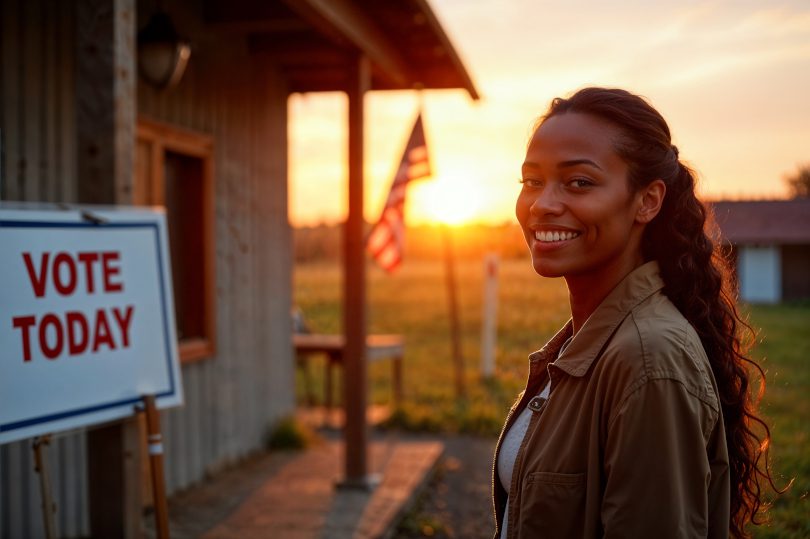
D.C. is known as the political heart of the United States. Home to the White House, Congress, and countless other historic institutions, the culture of the city is deeply intertwined with local policymaking. It came as little surprise when Washington, D.C. recorded the highest youth voter turnout in the nation in 2024. A staggering 73.2% of eligible 18–24-year-olds participated in the election. Young people are turning out to vote in record numbers. Yet for many young residents, voting is only part of the story. A growing question remains: Once the election is over, are young people actually being heard?
Political Belonging
In my interview on June 1st with Kendall Hawkins, a 20-year-old D.C. resident, Hawkins said that voting is a regular part of civic life. Having turned 18 just in time for the 2024 presidential election, she remembers feeling excited to cast her first ballot.
“I try to vote in every election, whether it’s for mayor, president, or even my neighborhood councils,” Hawkins said. “But I feel like the elected officials don’t really have my age group in mind. Sometimes I feel like my generation is an afterthought.”
Hawkins is not alone in that feeling. Researchers at the Center for Information & Research on Civic Learning and Engagement (CIRCLE) found that many young Americans reported being dissatisfied with candidates and felt disconnected from politics. They express lacking a sense of political belonging after the 2024 election. Less than one in four young people said they felt they belonged to a group that expresses itself politically.
These findings raise important questions for local communities in D.C. While presidential elections often attract significant attention, many decisions that directly affect young residents are made at the local level. Issues such as housing affordability, public transportation, education, public safety, and neighborhood development are often handled by city officials and other community organizations.
Greater Youth Representation
Despite the influence these institutions have on daily life, many young residents remain unaware of opportunities to participate in local decision-making. Addressing this disconnect requires more than encouraging young people to vote. Howard University student Awa Fall proposes that greater youth representation in community discussions could help ensure that young voices remain engaged year-round.
“Seeing somebody around our age group that is actively involved in creating change would be very inspiring,” Fall said.
Washington’s record-breaking youth turnout demonstrates that young people are more than willing to participate in democracy. The challenge moving forward is ensuring that their voices continue to matter after Election Day has passed.
Featured image/photo by
#YoungVocalandOverlooked
#DCVoice
#TheDCVoice
#DCVoiceMedia
#DCVoiceNetwork
#DCVoiceTV
#DCVoiceStudios
#DCVoiceOfficial
#changingthenarrative
#media
#news