
Over 1 million Venezuelans have migrated to the United States due to the political crisis which has been ongoing since Hugo Chavez took power in 1999. Of these immigrants over 26,000 live in the Washington metropolitan area. The United States is not Venezuela. However, there are lessons that can be drawn from Venezuela in the 1980s and 1990s about the conditions which allow for the rise of a populist regime. When democratic capitalist systems allow wealth inequality to shrink the middle class, they create the conditions for populist and anti-establishment political movements.
Historians like Manuel Anselmi, and Geo Ciccariello-Maher in their books (We Created Chávez: A People’s History of the Venezuelan Revolution and Chavez’s Children: Ideology, Education, and Society in Latin America), discussed how in 1989, the socioeconomic composition in Venezuela was 58 percent working class, 38 percent middle class, and 5 percent upper class. In 1999, when Hugo Chavez became president, the socioeconomic composition of Venezuela was 84 percent working class, 13 percent middle class, and 4 percent upper class.
Secretary of Treasury Scott Bessent described inequality in the United States right now as “the bottom 50 percent of Americans have debt, the next 40 percent own 12 percent of the stock market, and the top 10 percent of Americans own 88 percent of the stock market.”
In Venezuela, from the 1980s to the late 1990s, the explanation for wealth inequality was due to monopolies and oligopolies primarily in the oil industry, a rentier economy, and corrupt politicians. The United States has a much more diverse economy. The wealth inequality, which has grown in the last 20-25 years, is also due to the rise of oligopolies and monopolies and decreasing competition, thus creating a fractured form of capitalism.
My point in drawing this parallel is that from the wealth inequality grew resentment and frustration from which the Bolivarian Revolution led by Hugo Chavez was born. Now, I’m not saying that the United States’ future will be at all similar to the last 26 years under the Chavismo regime. What I am claiming is that the conditions that fueled the Trump era populism are unlikely to disappear after Trump’s time as president comes to an end.
The Maga movement under Trump is not addressing the needs of those who voted for him. The frustration and resentment will continue to grow, especially with inflation increasing, affordability issues, his immigration policy, and an ongoing war with Iran. Regardless of which party the working class will look to – whether it is the post Trump Republicans or the Democrats currently engaged in an internal battle between the establishment and antiestablishment party members. Polarization will continue, and forms of populism will maintain and continue to fuel antiestablishment political movements meant to address wealth inequality.
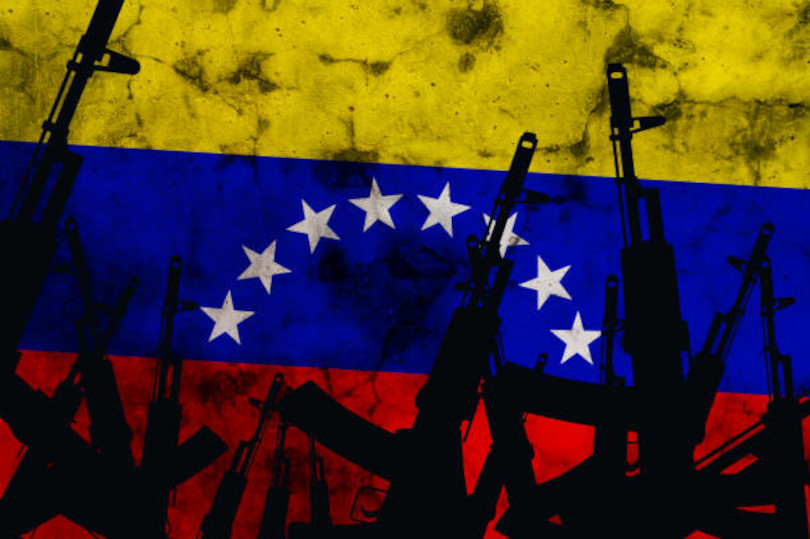
Featured image/photo courtesy of Pixabay.
#WhatVenezuelaTeachesUs
#DCVoice
#TheDCVoice
#DCVoiceMedia
#DCVoiceNetwork
#DCVoiceTV
#DCVoiceStudios
#DCVoiceOfficial
#changingthenarrative
#media
#news