

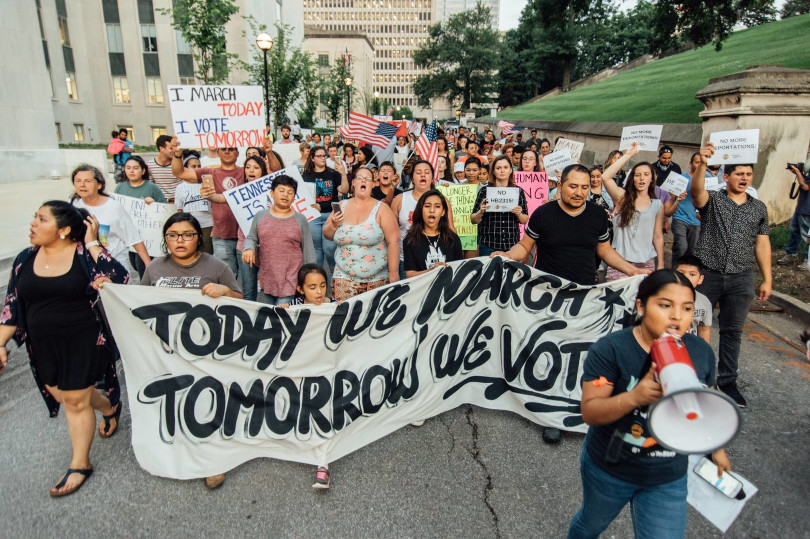
The first-ever national Latino and immigrant-focused civil rights march and rally occurred on October 12, 1996, in Washington, D.C. Tens of thousands of Latinos, including Mexican American students from Chicago, Guatemalan activists from Dallas, Salvadoran refugees from Maryland, Puerto Rican garment workers from New York, and Ecuadorian civic groups from Los Angeles, citizens and non-citizens alike, responded to the wave of anti-Latino and anti-immigrant sentiments in the U.S., protesting politics of exclusion, hatred, and blame.
Hispanic Representation
The march drew criticism, including claims that it was a gathering of radical extremists. Critics included California anti-immigrant activist Barbara Coe, who said in reference to those in the march, “The people out there today do not represent loyal American Hispanics.” The march built itself around a platform of seven demands for Congress. The five most relevant to today are: equal opportunities and affirmative action, citizen police review boards, expansion of health services, a streamlined citizenship program, and labor law reform.
Thirty years after the first national Latino civil rights march, many of the issues they were fighting for are at the center of American politics. While Latinos have become one of the nation’s most consequential labor and voting blocs, neither the Republican nor the Democratic Party has earned their loyalty.
Latinos in America
Latinos are the country’s second-largest racial or ethnic group, making up one-in-five Americans. In 2024, 79% of all U.S. Latinos were U.S. citizens, and the total Latino population reached 68 million in 2024. The Latino population is young, diverse, and dispersed across the United States. Latinos hold the highest labor force participation rate of any racial or ethnic group at 66 percent. They are projected to fill 78-91 percent of all net new jobs in the United States by 2031. In 2024, the U.S. Latino GDP reached $4.4 trillion. UCLA professor David Hayes-Bautista has said that, when it comes to the U.S. economy, “The Future is Latino.”
A politics of hate, blame, and exclusion still shapes the country. This is best exemplified by the Trump administration and its ICE agency operations. In 1996, marchers demanded citizen police review boards. Now, after ICE agents detained and injured Ricardo Gonzalez, whom local officials say is a US citizen, California lawmakers are asking the Homeland Security inspector general to investigate. Ricardo Gonzalez is one of over 500 US citizens who have been detained by ICE.
Dissatisfaction with Both Parties
The handling of immigration and economic issues under Presidents Biden and Trump has led Latinos to lose confidence in both parties. This results in wider swings in how Latinos are voting. In a moment when 68 percent of working-class Latinos say they are working harder than ever but falling behind, political strategist Mike Madrid argues that Latinos are “rejecting the parties in power, they’re rejecting establishment politics,” and that “we’re witnessing the rise of an emergent Latino populism.”
Both parties will have to answer the demands of the Latino working class or watch them keep walking away. For Latinos, the words of Juan Jose Gutierrez, the chief coordinator of the October 12, 1996 march in Washington, D.C., still resonate: “Sometimes it seems the reactionary forces of darkness are carrying the day, but we are more than they are, and we will find a door to let the light in again.”
Featured image/photo by Jon Dragonette for TIRRC Votes.
# ThirtyYearsAfterTheMarch
#DCVoice
#TheDCVoice
#DCVoiceMedia
#DCVoiceNetwork
#DCVoiceTV
#DCVoiceStudios
#DCVoiceOfficial
#changingthenarrative
#media
#news