

The death of 18-year-old Nolan Wells has raised questions about what happens when a missing-person case becomes a national story.
Wells, a Black college student, was visiting Mississippi’s Horn Island over the Fourth of July weekend when he went missing. His body was found two days later. His family has since raised questions about the circumstances surrounding his disappearance and death. This prompted involvement from civil-rights organizations and members of Congress, bringing renewed national attention to the case.
But Wells’ story also raises a question that extends beyond the details of his case. What happens to the missing children whose stories never receive that level of attention?
The question is particularly relevant as Americans increasingly encounter news through social media, where serious stories can appear alongside an endless stream of new information. For Kelsie Watts, an 18-year-old DC resident, the difference between seeing a story and actually engaging with it became clear when some of her friends encountered a missing-person case on their social media feeds.
It took three times.
Watts, in an August 12 interview, said some of her friends scrolled past the case three different times before they stopped to look at it. “We as humans have to remain considerate of each other, even if we are divided by the screen,” Watts said. Her observation speaks to a larger challenge in modern news consumption: learning how to remain informed about serious issues without becoming desensitized to them.
Jordan Harris, a 24-year-old Ward 1 resident, said in an August 14 interview he has noticed that desensitization firsthand. “I feel like as a society we have become alarmingly desensitized to lots of horrible stories,” he said. “Its so wrong but it’s also common to see a headline, feel horrible, and then get distracted by something else on your phone.”
The question of attention becomes especially significant when the story involves a missing child.
The National Center for Missing & Exploited Children reported 32,167 missing-child cases in 2025. Of those cases, 3,154 remained unresolved at the end of the year. Black children have historically been disproportionately represented among children reported missing to NCMEC. Black children accounted for 31% of children reported missing to the organization between 2016 and 2020. despite only representing approximately 14% of the U.S. population.
This issue is especially relevant in Washington, D.C., where the District maintains its own missing person database.
The District’s database currently lists 32 open missing-person cases. Among the current listings are 15-year-old Shemar Jackson, 17-year-old Tamar Carter-Williams, and 12-year-old Rahel King. The database also includes other juveniles, including 13-year-old Iris Reyes Zuniga and 17-year-old Saul Torres.
For many Washingtonians, those names may be unfamiliar. News consumers encounter an enormous amount of information each day. A missing person database can make a case accessible to someone who is actively searching for it. Meanwhile, media coverage and social media can bring that same case to people who otherwise may never encounter it. The difference is attention, which can be immensely difficult to sustain.
For Harris, that reality makes the possibility of a child’s story going unnoticed particularly concerning. “It makes me feel uneasy and worries me about having my own children in the future who could, God forbid, go missing and their story would possibly never receive adequate attention,” Harris said.
His concern points to a tension in modern news consumption. People cannot realistically follow every story or respond to every tragedy they encounter. At the same time, becoming accustomed to seeing serious events should not mean becoming indifferent to them. The goal may be to become more intentional about the information we choose to engage with.
This means taking the time to read beyond a headline. Checking whether information comes from an official or verified source and sharing accurate information is crucial. Consumers should also return to cases even after they stop appearing in the news cycle.
Nolan Wells’ case has shown how quickly a missing person case can become a national conversation when people continue asking questions. The NAACP’s recent involvement and calls for further investigation demonstrate how public attention can continue to grow around a case, even weeks after a disappearance.
But the thousands of other missing children whose names never reach a national audience deserve consideration, too. In an environment where the next headline is always one scroll away, staying informed may require something increasingly simple: stop, look and remember that there is a person behind the screen.
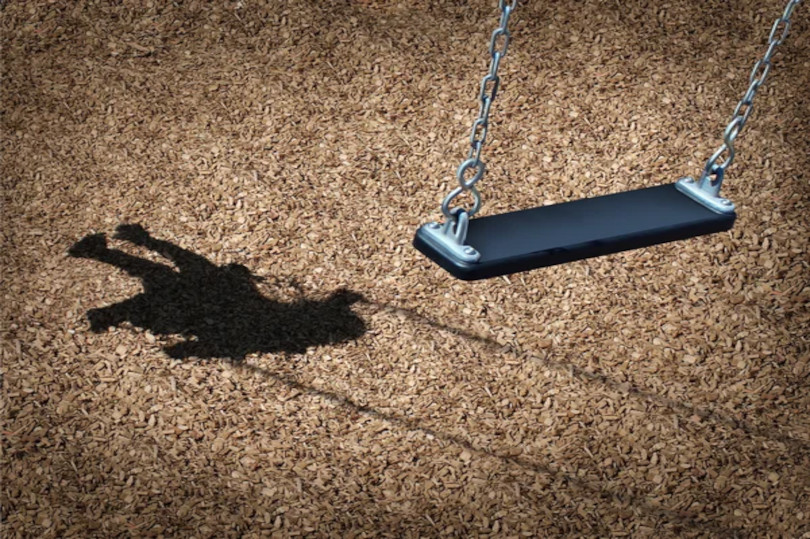
Featured image/photo by depositphotos.
#MissingChildren
#DCVoice
#TheDCVoice
#DCVoiceMedia
#DCVoiceNetwork
#DCVoiceTV
#DCVoiceStudios
#DCVoiceOfficial
#changingthenarrative
#media
#news