

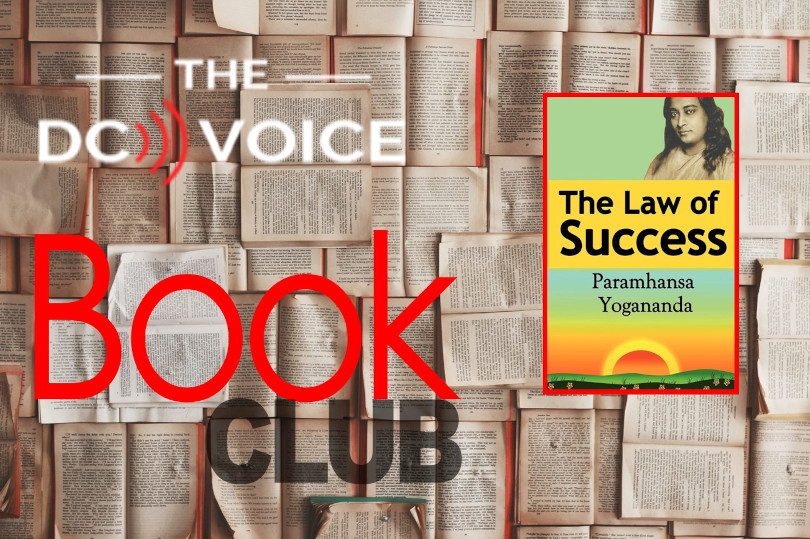
The Law of Success by Paramahansa Yogananda, author of Autobiography of a Yogi, is an easy, inspirational, and motivational read filled with important messages and anecdotes for just about everyone. Whether you are religious, spiritual, believe in a higher power, or rely primarily on willpower and the strength of the individual, there is something in this book for you.
A lot of inspirational books can read like tomes that require the reader to subscribe to a particular religious belief, trendy mindset, or meditative practice. Although the underlying premise of The Law of Success is spiritual, I found it easy to look beyond that and focus on the practical lessons—especially in my three favorite chapters: Chapters 6, 7, and 11.
Chapter 6: Fear Exhausts Life Energy
Chapter 6, “Fear Exhausts Life Energy,” focuses on how fear drains the physical and mental energy needed to concentrate on problems and remain focused on solutions. The brain, heart, and nervous systems work together to give us the ability to concentrate, make decisions, and keep moving forward.
Thought, emotion, and will—when working in harmony—can prevent fear from eroding the energy required to act. One of the chapter’s key takeaways is the distinction Yogananda makes between wishing and willing: “A wish is desire without energy,” while will means, “I act until I get my wish.”
That is a simple but powerful distinction. Wanting something is not the same as being willing to do what is necessary to achieve it.
Chapter 7: Failures Should Arouse Determination
Chapter 7, “Failures Should Arouse Determination,” describes the role failure should play in our determination to succeed. Failure provides an opportunity to analyze mistakes, learn from them, and develop a better strategy going forward. Failure, in other words, does not have to be the end of the effort. It can be information.
This chapter reminded me of the famous saying often attributed to Thomas Edison: “I have not failed. I’ve just found 10,000 ways that won’t work.”
It also brought to mind Muhammad Ali and Joe Frazier’s legendary third fight, the 1975 “Thrilla in Manila.” Both fighters had poured virtually everything they had into the fight. Ali later described the experience as the closest thing to death he had ever experienced. Yet when it came time for the final round, Ali stood up while Frazier’s corner stopped the fight.
That takes nothing away from Joe Frazier, whom I consider one of the greatest fighters of all time. Instead, the fight illustrates something much larger about determination. Sometimes success comes down to finding enough strength for one more round, one more attempt, or one more punch—literally or figuratively.
Chapter 11: Habits of Thought Control One’s Life
Finally, Chapter 11, “Habits of Thought Control One’s Life,” immediately reminded me of the Funkadelic song “Good Thoughts, Bad Thoughts” from their 1974 album Standing on the Verge of Getting It On.
Needless to say, I am a huge Parliament-Funkadelic fan. This unheralded song stuck with me from the first time I heard it. The Law of Success reminds us that it’s not necessarily our passing inspirations or occasional brilliant ideas that control us. It is our everyday mental habits. Funkadelic approaches the same idea through the metaphor of the “thought seeds” we plant in the garden of our minds, warning that those seeds eventually grow according to their kind. Yogananda makes a remarkably similar point. He describes thoughts as “mental magnets” that draw certain people, circumstances, and conditions toward us.
The message from both is essentially the same: the thoughts we repeatedly nurture matter. Good habits of thought encourage positive actions and outcomes. Destructive patterns of thought can lead us in the opposite direction. Funkadelic takes the idea considerably further—and in language that I will not repeat here. If you know anything about Funkadelic, you know they can be both colorful and explicit in getting their point across. You’ll have to find the song and take it from there.
Final Thoughts
The Law of Success contains lessons and anecdotes that readers from many different backgrounds can draw from. You don’t have to embrace every aspect of Yogananda’s spiritual philosophy to appreciate the larger message.
For me, Chapters 6, 7, and 11 came down to three simple ideas: don’t allow fear to drain the energy you need to act; don’t allow failure to stop you from trying again; and be careful about the thoughts you repeatedly plant in your mind.
Those are lessons that don’t require any particular religious or spiritual belief. They simply require putting them into practice.
#TheLawofSuccess
#DCVoice
#TheDCVoice
#DCVoiceMedia
#DCVoiceNetwork
#DCVoiceTV
#DCVoiceStudios
#DCVoiceOfficial
#changingthenarrative
#media
#news