


We Are the Leaders We Have Been Looking For by Eddie Glaude Jr., begins with a story about five Black men who made it to heaven and were instructed to wait for Gabriel to provide instructions on how to use their wings. However, one angel decides to take matters into his own hands and starts flying. He ignores the other angels who caution him to sit down and wait as Gabriel had instructed. He creates havoc, which leads Gabriel to rip off the man’s wings. Although his fellow angels chastise him and mock him because he is now the only one without wings, the man smiles and says, “I don’t care. I sure was a flying fool when I had them.”
That story seems to capture much of what Eddie Glaude Jr. is trying to say throughout the book. We spend a lot of time waiting for prophets, heroes, and leaders when maybe we should be looking more at what is already within ourselves.
The book begins and ends with a heavy dose of philosophy and philosophical points of view. At times, it’s very difficult to keep up with some of the philosophical discussions. You often feel like you’re in a philosophy class, and I believe that is also part of the intent image of the book: critical thinking and moral intelligence.
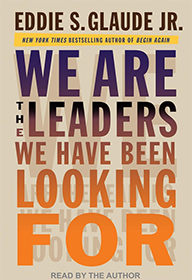
Glaude focuses on three character types: the Prophet, the Hero, and the Democratic Thinker. He uses Martin Luther King Jr. as the prophet, Malcolm X as the hero, and Ella Baker as the democratic thinker.
Prophecy is envisioning an unrealized possibility, an unforeseen possibility. Prophecy is merely a perspective of things to come and lies within us all, not a chosen few. When we cede that prophecy, we also cede our responsibility and minimize ourselves. No one person can hold a whole dream for a people. Those people have to be the people who hold those dreams for themselves. He makes the point that we are the prophets we have been looking for.
On heroism and Malcolm X, Glaude talks about a counter story to The Autobiography of Malcolm X. Instead of looking at Malcolm as some specialized character with superpowers, we should look at him as a common person who keeps trying to find a better version of himself. A hero continues to try to find a better version of themselves, a higher version of themselves.
That goes along with my contempt for anyone being seen as a “once in a lifetime” figure. He makes the case that great people exist so even greater people can follow. Hero worship can block self-actualization or realization because we get wrapped up in somebody else. Heroes are supposed to show us what is within ourselves, not what they can only do by themselves or on their own.
The third character type, the Democratic Thinker, is the closest representative of the title of the book. Baker was less concerned about developing leaders as opposed to developing leadership among other people. There is a difference. Spread it out. Let’s not focus on one person or develop the prophet, the hero, or the leader. Develop leadership potential in everyone. Baker stressed not looking for salvation externally but finding salvation within oneself. Find decisions within yourself as opposed to waiting for somebody to come in and provide them. This section introduces the concept of network democratic localism. Basically, groups of leaders united by a common mission bring these ideas together. Develop leadership potential in everyone. Don’t wait for somebody to come in and provide it.
That takes me back to the flying fool. He didn’t sit down and wait for Gabriel to provide instructions on how to use his wings. He took matters into his own hands.
We’ve got to keep flying.
And being a flying fool isn’t the worst thing in the world.
Featured image by The DC Voice.
#WeAretheLeadersWeHaveBeenLookingFor
#DCVoice
#TheDCVoice
#DCVoiceMedia
#DCVoiceNetwork
#DCVoiceTV
#DCVoiceStudios
#DCVoiceOfficial
#changingthenarrative
#media
#news