

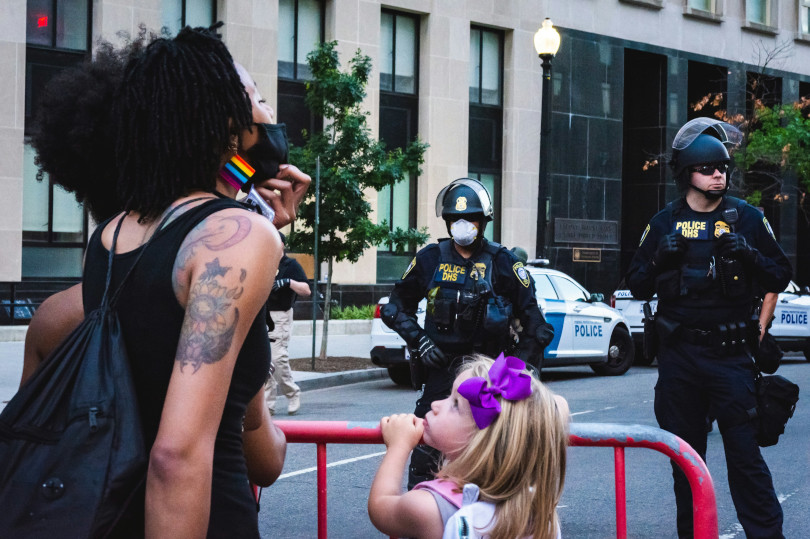
Justice and public safety continue to be two of the most contentious topics in American culture. Following incidents like Nolan Wells’ killing in Mississippi and the National Guard’s deployment in Washington, D.C., worries about racial injustice, police accountability, and government authority have grown. Despite the differences between these circumstances, they both bring up the crucial query, “Who watches the Watchmen?” This term poses the question of who is in charge of holding public safety officials accountable when their authority is called into doubt. When these incidents are considered collectively, they highlight the significance of openness, public confidence, and legal equality.
Accountability
In 2026, Nolan Wells, an 18-year-old Black male, vanished on a Fourth of July boating excursion to Horn Island, Mississippi. His body was found on July 6, and as his family looked for explanations, his death garnered global attention. Reuters reported that a grand jury decided on September 21 that there was not enough reliable evidence of criminal activity to indict anyone in relation to his death. Although the official cause and method of death were still unknown, authorities stated that the evidence was compatible with drowning.
Sending in The Guard
Trust Issues
Even while the circumstances of the Wells case and the National Guard deployment are distinct, they both relate to more general issues of accountability, justice, and trust. While the deployment sparked discussion about how government power should be used within communities, Wells’s death generated concerns about whether his family would receive enough answers. Neither circumstance by itself proves wrongdoing. Both, however, show why independent scrutiny and open procedures are required when public institutions use their power.
These problems are especially important for historically underprivileged groups, such as Black Americans, whose mistrust of law enforcement has been exacerbated by their experiences with unfair policing and discriminating treatment. Concerns over intimidation, excessive force, and unfair treatment may arise from increased military or law enforcement visibility. Without supposing that every National Guard member or officer behaves unlawfully, such concerns merit careful investigation.
Practical precautions are necessary for meaningful accountability. Authority can be used responsibly with the support of independent investigations, public reporting, explicit regulations controlling the use of force, suitable training, easily accessible complaint procedures, and repercussions for proved misbehavior. Additionally, communities ought to be given the chance to take part in conversations concerning public safety regulations that directly impact them.
Watching the Watchmen
Examining whether these laws provide equal protection for all is necessary for racial justice. Residents should be allowed to challenge the information used to justify choices made by officials, such as designating neighborhoods as unsafe or stepping up enforcement in specific communities and know how their rights will be upheld. Racial, socioeconomic, or geographic factors shouldn’t affect public safety.
In the end, the question “Who watches the Watchmen?” involves more than just police officers. It concerns the responsibility of every organization that has been given public authority. While protecting its residents, a just society must make sure that those who uphold the law continue to be held accountable. The United States can strive toward a system where accountability builds rather than erodes public trust through openness, independent oversight, and equal protection.
Featured image/photo by Gayatri Malhotra on Unsplash.
# PoliceAccountability
#DCVoice
#TheDCVoice
#DCVoiceMedia
#DCVoiceNetwork
#DCVoiceTV
#DCVoiceStudios
#DCVoiceOfficial
#changingthenarrative
#media
#news